
Staring at a dead outlet or a light that will not stop flickering can make you wonder how much electrical work you can safely handle yourself. You might have already watched a video or two and thought, “That does not look so hard.” At the same time, you probably know electricity is not forgiving if something goes wrong.
For homeowners across Springfield and Chicopee, that tension is real. You want to save money, avoid waiting around for appointments, and keep your home running smoothly. You also do not want to get shocked, start a fire inside a wall, or end up with a problem that an inspector or insurance company questions later.
We understand that balance because we have been working in homes and businesses throughout Chicopee, Springfield, and nearby communities since 1955. Our team at Electrical Experts focuses on safe, reliable electrical solutions, and we see every day where DIY works and where it quietly creates risk. In this guide, we will share what we have learned so you can handle simple tasks with confidence and recognize the point where calling a licensed electrician is the safer move.
Need an electrical expert? Schedule your next electrical service in Chicopee with us! We use quality products and advanced techniques to ensure the best results. Contact us at (413) 276-4787 today and discover the difference with your local electrical contractor.
DIY Electrical Repairs in Springfield: What Homeowners Are Really Asking
Most people in the Springfield area are not searching “DIY electrical repairs” for fun. They are staring at a specific problem, such as an outlet in the kitchen that suddenly stopped working, a light that hums and flickers, or a breaker that trips whenever the microwave and toaster run together. The immediate question is simple. “Can I fix this myself tonight, or do I need to call someone?”
Cost and convenience sit in the background of that question. If you are handy, you have probably changed a faucet, patched drywall, or replaced a lock without thinking twice. Electrical work feels like it might fit into that same category, especially when a device swap looks as easy as moving a few wires from point A to point B. The problem is that with electricity, a mistake you cannot see can still be heating up or waiting to fail under load.
In Springfield and Chicopee, we also work in a lot of older homes where several generations of owners have done their own projects. That means what looks like a simple outlet or light switch on the surface may be tied into older wiring, shared neutrals, or previous DIY connections that are already marginal. Our goal in this article is to help you sort everyday electrical jobs into three buckets. Low-risk tasks most homeowners can handle, projects that look simple but carry hidden dangers, and clear warning signs that mean you should stop and call a licensed electrician.
How Your Home’s Electrical System Keeps You Safe
Before deciding what to tackle, it helps to understand, in simple terms, how your electrical system is supposed to protect you. Power comes from the utility into your service, then into your main electrical panel. From there, it splits into multiple branch circuits, each protected by a circuit breaker or fuse that is sized for the wiring on that circuit. Those circuits feed your outlets, switches, and light fixtures.
A circuit breaker is not just an on and off switch. It measures how much current is flowing. If too much current runs through a circuit because of an overload or a fault, the breaker trips and cuts power. That trip is a safety feature that helps prevent the wires in the wall from overheating. If someone replaces that breaker with a larger one, or ties too many devices into a single circuit, the breaker might not trip when it should, which increases fire risk.
Grounding and GFCI protection provide another layer of safety. Grounding gives stray electricity a low resistance path back to the panel and then safely into the earth. If a hot wire touches metal, the ground helps create a fault that trips the breaker quickly. Ground Fault Circuit Interrupter, or GFCI, outlets, typically found in bathrooms, kitchens, garages, and outdoor locations, constantly compare current leaving and returning. If even a small amount leaks, such as through a person to ground, the GFCI cuts power in fractions of a second to reduce shock risk.
When we perform whole home safety inspections in Chicopee and Springfield, we look at how all of these pieces work together. We often see situations where a device might “work” but bypasses or weakens these protections, for example missing grounds, miswired GFCIs, or oversized breakers.
Low-Risk Electrical Tasks Most Homeowners Can DIY
There are electrical jobs that a careful homeowner can usually tackle with a low level of risk. These tend to be tasks that do not involve opening junction boxes, altering wiring connections, or changing loads on a circuit. They also assume you follow some basic safety steps and stop if something does not look right.
Simple examples include replacing light bulbs, swapping decorative switch or outlet cover plates, and resetting a tripped breaker properly. For these, the wiring stays untouched. When resetting a breaker, make sure you push it firmly to the full off position before turning it back on. If it trips again immediately, that is a sign of a deeper issue, not a stubborn breaker that just needs more force.
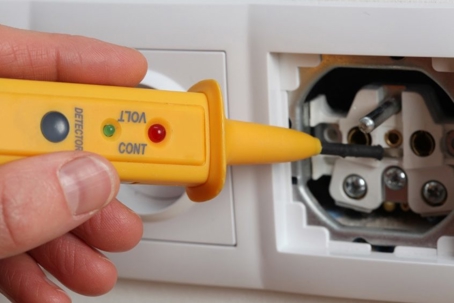
If you step up one level, there are slightly more involved tasks that some homeowners choose to do, such as replacing a light fixture on an existing box where the wiring is in good condition and properly grounded. Even with these, safety steps matter. Turn off the correct breaker at the panel, confirm there is no power with a non contact voltage tester, and work in a dry area with a stable ladder. If you see brittle insulation, scorched wires, loose metal boxes, or aluminum wiring, stop and call a professional.
At Electrical Experts, we meet many Springfield and Chicopee homeowners who handle basic tasks and then bring us in when something feels off, or they find signs of older or DIY modified wiring behind a cover. That is a smart approach. Treat your own comfort level and what you actually see in the box as part of the safety decision, not just the assumption that “this should be easy.”
“Looks Simple, But Is Not”: Common DIY Projects That Can Turn Dangerous
Some electrical projects look straightforward from the outside. A light switch is a light switch, an outlet is an outlet, and a ceiling box is just a box. In practice, these are the projects where we often see DIY work create problems that take time and expense to untangle later.
Outlet and switch replacements are a prime example. On a simple, modern copper-wired circuit with proper grounding, a like for like device swap can be manageable for a skilled homeowner. In many Springfield and Chicopee homes, though, we find aluminum branch wiring, shared neutrals, older ungrounded cables, or multiple circuits sharing a box. Using the wrong devices with aluminum wiring, or connecting conductors improperly, can lead to loose connections that heat up over time. Backstabbed terminations, mixed wires under one screw, or bonding neutral and ground where they should be separate are all issues we see after DIY attempts.
Ceiling fan installations are another area where risk is easy to underestimate. A fan weighs more and moves differently than a simple light fixture. The box in the ceiling must be rated to support the fan’s weight and motion, and it needs proper attachment to framing. We are frequently called to homes where a fan was hung from a box meant only for a light, which can loosen over time and even pull loose from the ceiling. Dimmers and fan controls also have specific ratings and must match the type of fixture and total load on the circuit.
Any project that adds new outlets, extends wiring, or changes how a circuit is laid out crosses a line from device replacement into a system change. That means load calculations, box fill, cable routing, support, and code requirements all come into play. In our work on panel upgrades, aluminum wiring replacement, and circuit additions, we regularly uncover hidden junctions, overloaded boxes, and spliced wires buried in walls or ceilings from past DIY work. These systems might seem fine until a heavy appliance or seasonal load pushes them over the edge.
Warning Signs to Stop DIY and Call an Electrician Immediately
There are clear signals that electrical work is no longer a weekend project and has turned into a safety issue. If you run into any of these, the priority shifts from “can I fix this myself” to “how do I keep my home and family safe right now.”
Burning smells, scorch marks around outlets or switches, or devices that feel warm or hot to the touch are immediate red flags. Heat at a device often means a loose or failing connection creating resistance, which can ignite nearby materials. Buzzing sounds from a switch, outlet, or your electrical panel can indicate arcing or a failing component. Replacing the device without understanding the cause can hide the symptom without fixing the problem.
Repeated breaker trips also deserve attention. If a breaker trips again and again when you use a specific appliance or combination of appliances, it may be doing its job by protecting an overloaded circuit, or it may be signaling a fault in wiring or equipment. Simply replacing a breaker with a higher amperage model to “solve” the nuisance trip is dangerous because it allows more current to flow than the wiring is designed to handle.
Sparks when you plug in a device, tingling when you touch an appliance, or any sign of melted insulation or exposed conductors should stop DIY in its tracks. Those conditions suggest problems with grounding, damaged cables, or faulty equipment that require proper testing and tools to diagnose. In situations like this, Springfield and Chicopee homeowners contact us for fast help. With 24/7 emergency availability, we can respond quickly to stabilize the situation, identify the cause, and carry out repairs backed by our installation and repair warranties.
Springfield & Chicopee Homes: Local Factors That Change DIY Risk
Not every home in the Springfield area faces the same electrical risks. The age of your house, how many times it has been remodeled, and how much DIY work previous owners have done all affect what is safe for you to take on yourself. Many of the properties we visit in Chicopee and Springfield have a mix of original wiring, partial updates, and add ons from different eras.
In some older homes, we still find remnants of knob and tube wiring or early non grounded cable. Even if much of the system has been updated, sections of older wiring can remain in walls or ceilings feeding certain lights or outlets. Adding devices or changing connections on these circuits without understanding which parts are old and which are new can create odd interactions and safety gaps. Ungrounded outlets, for example, limit what kind of protection modern devices and surge protectors can provide.
Aluminum branch wiring is another local factor we encounter. It was commonly used during certain decades and behaves differently from copper at connection points. Aluminum expands and contracts more with temperature changes, which can loosen terminations over time if the correct devices and connectors are not used. A simple outlet or switch replacement on an aluminum wired circuit is not just a matter of matching wire colors. It often requires CO/ALR rated devices or special connectors, and careful tightening of terminals to reduce the risk of overheating.
Panels and service equipment also vary widely across Springfield and surrounding communities. We see undersized panels struggling to support today’s loads, panels with multiple double tapped breakers, and outdated equipment that no longer matches current safety expectations. Any work that involves the main panel, service conductors, or adding new circuits typically requires permits and inspections. That is professional territory. Our electricians are trained to recognize these conditions during whole home safety inspections and upgrades, and to bring systems up to current standards in a way that respects the structure and history of the home.
How to Decide: DIY Fix or Call Electrical Experts?
With the basics in mind, it helps to have a simple way to decide what category your project falls into. Start with the type of work. If you are only replacing a light bulb, swapping a decorative cover plate, or properly resetting a breaker that tripped once and stays on, you are firmly in low risk DIY territory. As soon as you are loosening device screws, moving wires, or opening junction boxes, your risk level rises.
Next, consider the location. Work in bathrooms, kitchens, laundry areas, basements, garages, and outdoors involves moisture or grounded surfaces that increase shock risk. These locations usually require GFCI protection and careful attention to grounding. If your project touches these spaces, and especially if you see no GFCI protection in older Springfield or Chicopee homes, involving a licensed electrician is often the safer call.
Then, look at the symptoms and what you actually see when you remove a cover. If there are burning smells, heat, buzzing, repeated breaker trips, or multiple cables and splices crammed into a box, this is no longer a simple swap. Mixed wire types, aluminum conductors, brittle insulation, or evidence of prior DIY fixes all tip the scale toward calling a professional. That is the point where our training on load calculations, box fill, and code requirements comes into play.
Finally, weigh the cost and risk tradeoff. A DIY fix that fails or hides a deeper problem can lead to more expensive repairs later, or damage that voids warranties on equipment or raises questions with insurers. When you contact Electrical Experts, you get clear, upfront pricing and a 1 hour appointment window, so you do not have to guess about the cost or lose a day waiting. Our five year warranty on installations and repairs, ten year warranty on service upgrades, and No Lemon guarantee on panels provide long term protection that most DIY work cannot match.
When You Call Electrical Experts, What You Can Expect
Deciding to hand a project over to a professional should feel like a relief, not another source of stress. When you call Electrical Experts, we schedule your visit within a 1 hour appointment window so you are not left wondering when someone will arrive. Our electricians show up in uniform, with identification, so you know who is at your door.
Inside your home, we treat your space with care. Technicians wear shoe covers and lay down protective coverings where needed. They take time to listen to what you have experienced, look over the affected area, and then explain what they find in clear, everyday language. If we discover signs of older wiring methods, DIY modifications, or panel issues, we walk you through what that means for safety and what your options look like.
Before any work starts, you receive straightforward pricing so you know the cost of each option. For installations and repairs we perform, we back our work with a five year warranty, and service upgrades carry a ten year warranty. Panels installed by us come with a No Lemon guarantee. Our membership in Success Group International reflects our commitment to proven best practices, and our strong reputation across Hampden County means many of your neighbors have trusted us with their homes for years.
Talk Through Your DIY Electrical Questions With a Local Team You Can Trust
You do not have to choose between doing everything yourself and never touching anything electrical. With a better understanding of how your system protects you, which tasks are low risk, which projects hide serious hazards, and what warning signs to watch for, you can make smarter decisions about work in your Springfield or Chicopee home. Some jobs will fit comfortably into your skill set, and others are safer and more cost effective when handled by a trained electrician who sees these systems every day.
Schedule a Chicopee electrical service by reaching out to Electrical Experts online or by calling (413) 276-4787 today!