
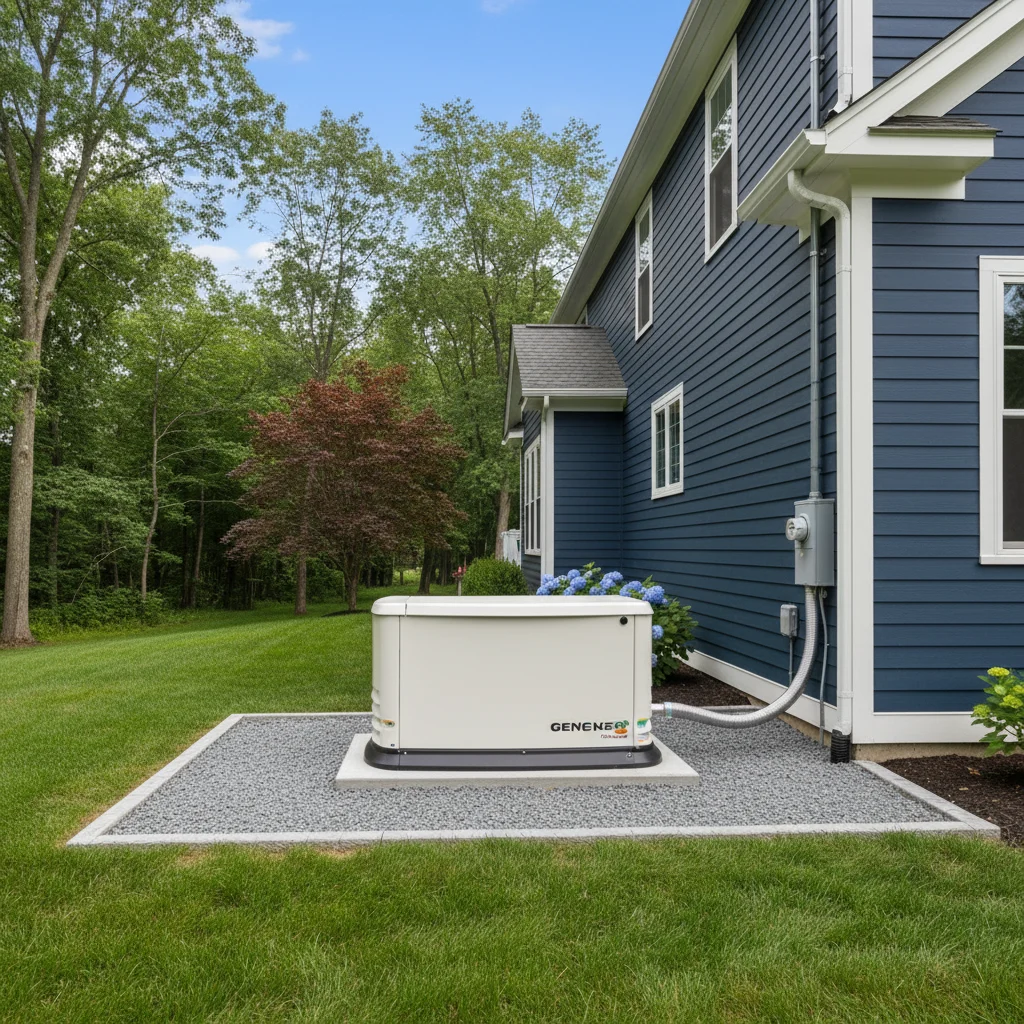
You face severe winter electrical challenges in Hampden County that homeowners in flatter, coastal areas never encounter. The geography of the Connecticut River Valley combines steep elevation changes with mature deciduous tree canopies, creating distinct microclimates where heavy, moisture-laden snow rapidly accumulates on overhead power distribution lines. When an Arctic front pushes through Western Massachusetts, local utility crews must navigate winding hillside roads, dense forest corridors, and freezing fog to isolate faults. This environmental reality turns minor regional grid failures into prolonged outages that last for days. Installing a whole-house standby generator provides immediate power security, protecting your heating system, water supply, and home infrastructure against freezing temperatures before the utility company can even dispatch a service truck.
Critical Winter Grid Vulnerabilities in Hampden County
The electrical infrastructure in our region contends with intense seasonal stress because primary transmission corridors run adjacent to dense timber and rolling terrain. Rapid temperature drops freeze wet precipitation directly onto tree limbs, adding thousands of pounds of mechanical stress above primary utility conductors. Once high winds sweep down the valley, branch failure leads to downed distribution lines, blown pole-mounted transformers, and widespread feeder lockouts across the county. The resulting power loss instantly cuts residential power supplies, jeopardizing heating systems during life-threatening cold snaps.
- Heavy wet snow adheres to overhead wiring, causing line gallop and physical conductor snaps.
- Dense roadside forests prevent rapid bucket truck access on narrow rural roads during storms.
- River valley ice dams and freezing rain overwhelm regional substation switching circuits.
- Back-fed grid overload events trigger automatic safety trips along older rural utility branch circuits.
These severe conditions demand dedicated on-site power generation rather than reliance on emergency grid repair timelines. Understanding these local vulnerabilities allows you to establish a robust home defense system before freezing temperatures arrive.
How Standby Generators Protect Pioneer Valley Homes
Whole-house backup power systems operate continuously through an intelligent automatic transfer switch (ATS) mounted beside your main service panel. The moment utility voltage drops below acceptable operating thresholds, the ATS automatically signals the generator engine to start. Within ten seconds, the internal mechanical contacts transfer your structural electrical loads away from the damaged municipal power grid directly to the generator alternator. You gain uninterrupted electricity for your boiler circulator pumps, forced-air blowers, refrigeration, and medical devices without ever stepping outside into sub-zero weather.
When you invest in permanent Generators, you eliminate the safety hazards associated with portable units, such as extension cords run through cracked windows, deadly carbon monoxide infiltration, and manual refueling in dark blizzards. In neighboring towns like South Hadley and Westhampton, where private well pumps require immediate 240-volt starting power, standby systems maintain constant potable water pressure and preserve basic sanitation. The system continuously monitors grid voltage, smoothly returning your property to utility power and executing a controlled engine cooldown sequence once municipal power stabilizes.
Sizing Electrical Loads for Severe New England Freezes
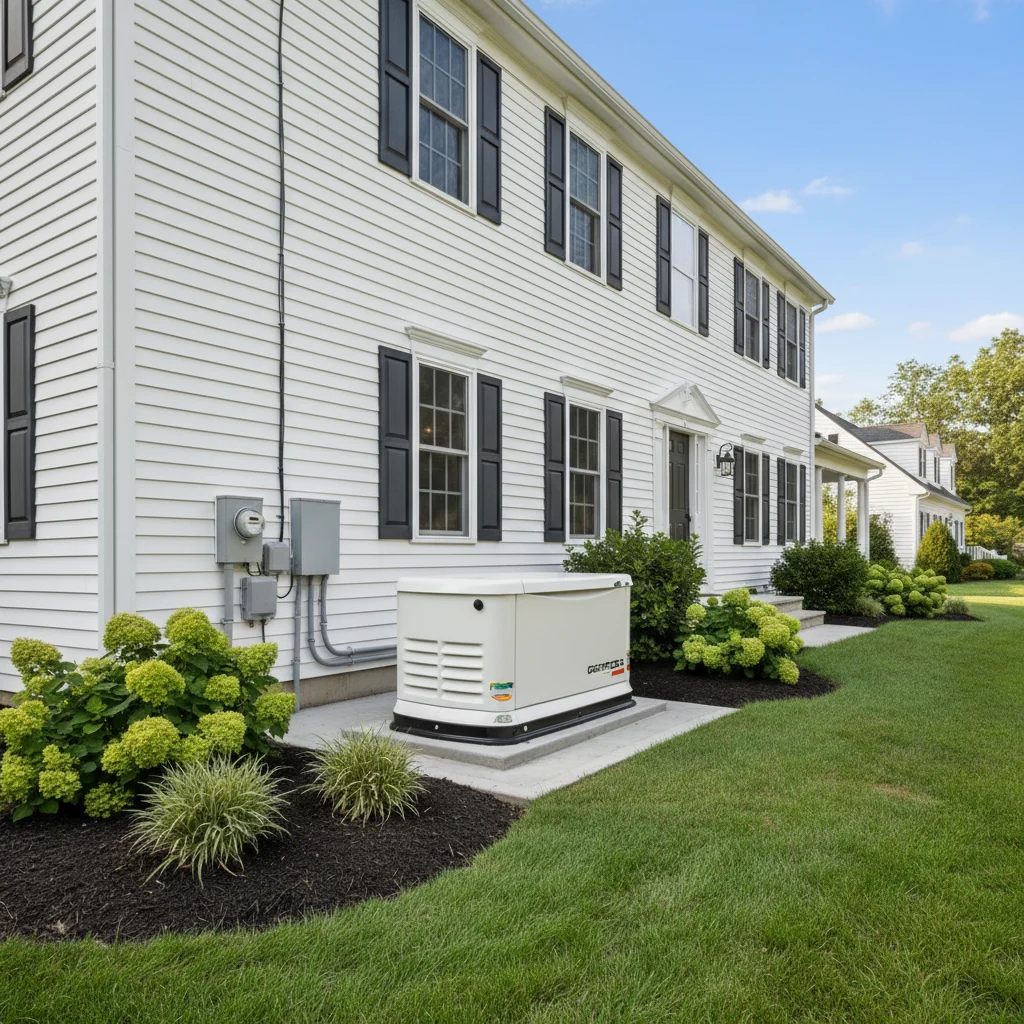
Accurate electrical load sizing separates reliable winter backup systems from dangerous equipment overloads. Modern heating equipment, such as geothermal systems, ductless cold-climate heat pumps, and high-efficiency gas boilers, draw significant starting currents known as Locked Rotor Amps (LRA). According to documented research by the Electric Power Research Institute (EPRI), residential heat pumps operating in freezing temperatures experience peak inductive current draws up to three times their standard running load because compressor crankcase heaters and auxiliary electric heat strips activate simultaneously. If your standby generator lacks sufficient transient surge capacity, this instantaneous demand can stall the generator motor or trigger internal circuit breakers.
We calculate both continuous running wattage and peak starting surge wattage across every dedicated circuit in your home. Critical winter life-safety loads include your heating plant, well pump, sump pump, primary refrigerator, sewage ejector, and targeted interior lighting. Homes featuring 200-amp or 400-amp electrical service entries often utilize digital load management modules. These intelligent relays temporarily shed non-essential loads, such as electric vehicle chargers or clothes dryers, whenever primary HVAC compressors cycle on, ensuring total home comfort without requiring an oversized commercial power plant.
Standby Generator Capacity and Fuel Comparison
Selecting the ideal generator platform requires balancing total kilowatt output against available on-site fuel infrastructure. Standby units run on natural gas supplied by public utility meters or liquid propane (LP) delivered to dedicated outdoor storage tanks. Natural gas provides an uninterrupted fuel supply during major storms, while liquid propane offers higher energy density per cubic foot for properties without municipal utility gas hookups.
| Generator Output (kW) | Primary Fuel Source | Average Fuel Consumption (50% Load) | Critical Systems Supported | Recommended Property Profile |
|---|---|---|---|---|
| 14 kW to 18 kW | Natural Gas / Liquid Propane | 1.6 gal/hr LP or 140 cu ft/hr NG | Furnace blower, refrigerator, lighting, well pump | Small to mid-sized homes with fossil-fuel heating |
| 20 kW to 24 kW | Natural Gas / Liquid Propane | 2.1 gal/hr LP or 195 cu ft/hr NG | Whole-house lighting, boiler, well pump, dual refrigeration | Standard suburban homes with central air and gas heat |
| 26 kW to 30 kW | Natural Gas / Liquid Propane | 2.8 gal/hr LP or 260 cu ft/hr NG | Electric heat pumps, dual HVAC units, EV charging, luxury loads | Large estates or homes relying entirely on electric heat |
Liquid propane delivers approximately 2,516 BTUs per cubic foot compared to roughly 1,030 BTUs for standard natural gas. Consequently, generators connected to natural gas lines experience a minor engine de-rating of roughly ten percent compared to propane operation. Our technicians account for this exact mechanical output variance during initial equipment selection to guarantee full rated power output during zero-degree winter storms.
Fuel Supply Logistics: Natural Gas and Liquid Propane in Western Massachusetts
Delivering sustained fuel volume to an active internal combustion engine during severe cold requires meticulous pipe design. Freezing ambient temperatures cause liquid propane vapor pressure to plummet rapidly inside residential tanks. If a property in Buckland or Hatfield relies on a half-empty 120-gallon propane cylinder during a sustained ten-degree blizzard, the reduced tank surface area cannot boil liquid fuel into gas vapor quickly enough to satisfy generator demand. We calculate exact tank vaporization rates and pipe diameters, ensuring large-capacity multi-tank manifolds deliver full required dynamic gas pressure under maximum engine draw.
For homes connected to municipal natural gas networks, we evaluate existing gas meter ratings before mounting your generator. Standard residential gas meters often max out at 250,000 BTUs per hour, which barely supplies an active furnace, water heater, and cooking range. Running a 22-kilowatt standby generator requires an additional 250,000 to 300,000 BTUs per hour at full load. We coordinate directly with regional utilities to authorize meter upgrades and install oversized gas supply pipe lines, avoiding engine starvation and preventing low-pressure burner outages inside your living space.
Installation Standards, Permitting, and Local Municipal Codes
Standby generator installations involve both high-voltage electrical work and combustible fuel plumbing, requiring strict adherence to building safety codes. National Fire Protection Association (NFPA) Standard 37 requires outdoor generator enclosures to sit a minimum of five feet away from operable building openings, including windows, doors, and exterior basement bulkheads. Enclosures must maintain at least eighteen inches of clearance from non-combustible exterior wall assemblies, provided the manufacturer documentation certifies fire-tested containment. These critical clearances prevent lethal exhaust gases from infiltrating your living spaces while the generator runs continuously.
In Massachusetts, all electrical modifications must comply fully with 527 CMR 12.00 (the Massachusetts Electrical Code) and National Electrical Code (NEC) Article 702. We pull mandatory municipal electrical and plumbing permits across all local jurisdictions, coordinating final inspections with municipal wiring inspectors. Our team delivers Precision Electrical Services to ensure total grounding compliance, proper utility neutral bonding, and verified disconnect switches. When upgrading primary home distribution equipment, you can rely on our comprehensive Precision Electrical Services to bring your electrical panel into full code compliance.
Essential Cold-Weather Maintenance Protocols
A standby generator must execute an automated cold start instantly in the dead of winter, making rigorous mechanical maintenance essential. Sub-zero temperatures thicken standard motor oil, creating intense drag on internal crankshaft bearings and starter motors during cranking. Installing a specialized cold-weather accessory package resolves this issue. These kits integrate thermostatically controlled oil pan heaters and engine block warmers that maintain optimum internal engine fluid temperatures year-round, alongside dedicated battery warmers that keep the 12-volt starting battery at peak chemical readiness.
- Inspect and replace starting batteries every two to three years to avoid cold-cranking voltage drop.
- Use full synthetic 5W-30 engine oil designed for extreme temperature viscosity stability.
- Examine flexible fuel line connections for micro-fissures caused by severe thermal contraction.
- Clear snowdrifts and ice accumulation at least three feet around the perimeter of the cabinet.
- Verify that weekly automated engine exercise cycles run under full functional switch monitoring.
Electrical transients can also occur when high-power generators transfer loads back to utility power lines. For advanced equipment security, consider our guidance on how to Safeguard Your Appliances: The Importance of Whole-Home Surge Protection in Chicopee, ensuring sensitive computer circuits and microprocessors survive all sudden voltage spikes.
Securing Reliable Power with Professional Installation
Proper standby generator installation demands master-level electrical design, specialized load calculations, and precise mechanical plumbing. Choosing an experienced local team prevents costly installation errors, undersized service drops, and code violations that void equipment warranties. At Electrical Experts, we handle every stage of your home generator installation, including detailed load calculations, municipal permitting, utility coordination, poured concrete mounting pads, and whole-house transfer switch wiring. We configure your emergency power infrastructure to run seamlessly so your household remains warm, secure, and fully operational throughout the most severe New England winter storms.
Protect your family and property against extended grid failures this winter. When you need immediate answers or personalized project planning, Contact Us to speak with a licensed electrical specialist. You can also easily Schedule Online to book your comprehensive on-site generator evaluation today. Call Electrical Experts now at 413-276-4787 to secure your power supply before the next winter storm strikes Western Massachusetts.
Frequently Asked Questions
How long can a whole-house standby generator run continuously during an outage?
A standby generator can run continuously for multiple days or weeks as long as it receives steady fuel. Units running on natural gas operate indefinitely, while propane units can run for several continuous days depending on your storage tank capacity. You only need to shut the unit down briefly every 48 to 72 hours to verify oil levels.
Will a standby generator power my entire house, including my central air and electric heating?
Yes, an appropriately sized standby generator can power your entire home, including heavy heating equipment and large appliances. Our technicians balance your total electrical demand through detailed load calculations or smart load management modules. This engineering guarantees that major motors start smoothly without overloading the generator engine.
Where can a standby generator be safely located on my property?
Generators must sit outside on a stable concrete pad or reinforced composite base, positioned away from opening windows, doorways, and dryer vents. National safety codes require at least five feet of clearance from operable openings and adequate space from property boundary lines. We evaluate your property layout during the initial site assessment to determine an optimal, code-compliant location.
Does a whole-house generator turn on automatically if I am away from home?
Yes, your standby generator activates automatically within seconds of a detected utility grid failure. The automatic transfer switch constantly monitors utility voltage, starts the generator, and shifts your home electrical loads without requiring manual intervention. Once line power returns, the system reconnects to the utility grid and performs an automated engine cooldown sequence.
How often does a standby generator need professional maintenance?
Standby generators require professional routine maintenance at least once per year or after every 100 to 200 hours of continuous operation. Annual maintenance includes changing engine oil, replacing air and oil filters, testing the battery, and inspecting the transfer switch mechanics. Regular servicing ensures the engine starts reliably when severe winter storms strike.
Can I install a whole-house standby generator myself to save money?
No, you should never attempt to install a standby generator without professional licensing. Standby generator installations require high-voltage electrical panel modifications, utility metering coordination, and explosive fuel line connections that mandate municipal permits and inspections. Professional installation guarantees code compliance, prevents lethal electrical back-feeding, and maintains your manufacturer warranty.